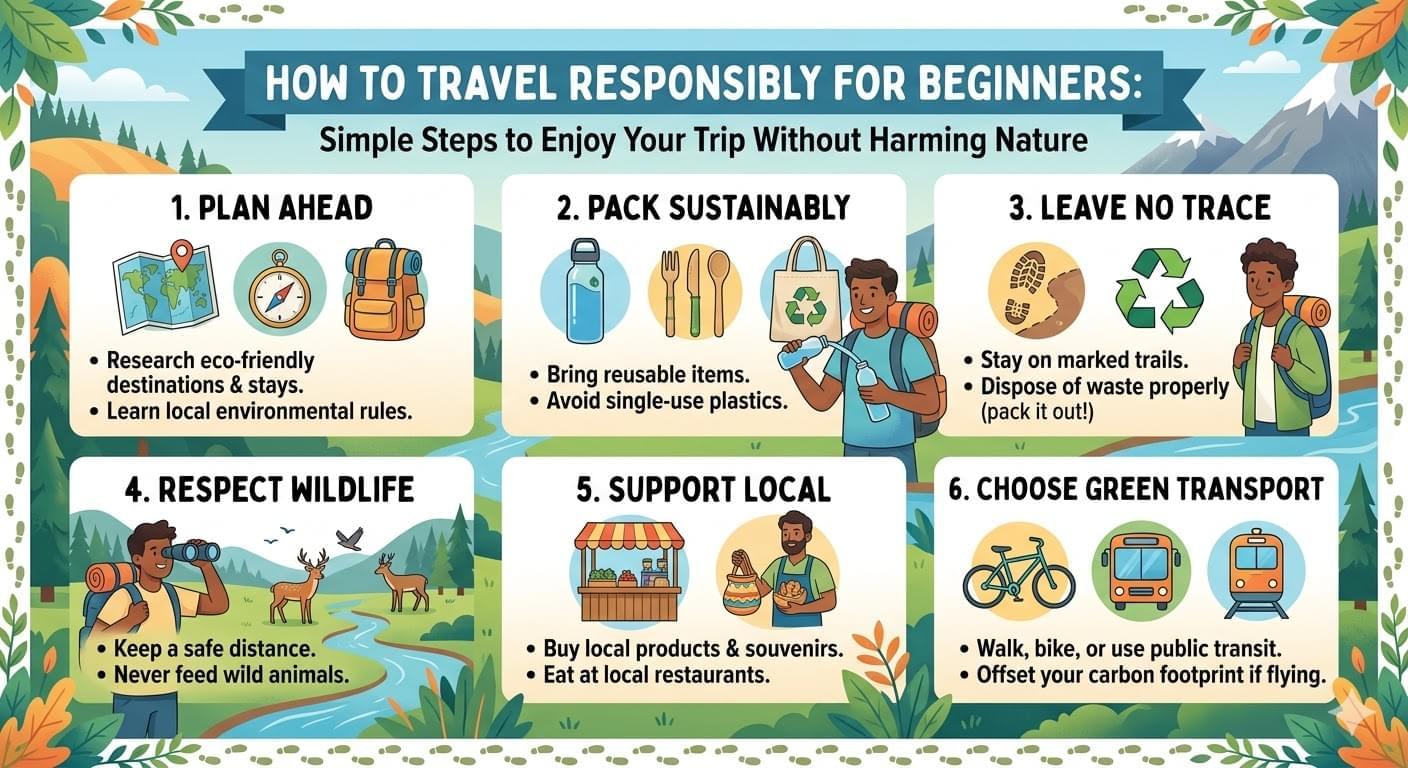
Traveling is one of the best ways to explore new places, learn about different cultures, and enjoy beautiful natural surroundings. However, travel can also create pressure on the environment and local communities when it is done carelessly. That is why understanding How to Travel Responsibly For Beginners is so important. Responsible travel means making thoughtful choices that reduce harm, support local people, and protect the natural beauty of the places you visit. It is not about making travel difficult. It is about becoming more aware of your impact and taking simple steps to travel in a better way.
Understand What Responsible Travel Means
The first step in learning How to Travel Responsibly For Beginners is understanding the true meaning of responsible travel. Responsible travel is all about respecting the environment, local culture, and the people who live in the destination. It means avoiding activities that damage nature, reducing waste, and making choices that positively contribute to the place you are visiting. A responsible traveler thinks beyond personal enjoyment and considers how their actions affect the destination in the long term.
Research Your Destination in Advance
Before starting your trip, take time to learn about your destination. This is one of the most practical steps in How to Travel Responsibly For Beginners. Research local customs, cultural expectations, dress codes, environmental rules, and any conservation guidelines in the area. Some destinations may have protected wildlife zones, water shortage issues, or strict rules about plastic usage. Knowing this information in advance helps you avoid mistakes and travel with more respect and awareness.
Choose Eco-Friendly Transportation
Transportation has a major impact on the environment, so choosing greener options is an important part of How to Travel Responsibly For Beginners. When possible, choose trains, buses, or shared transport instead of private cars. If you are exploring a city or town, walking or cycling is often the best option. These choices reduce pollution and also allow you to experience the destination in a more meaningful way. If you need to fly, try to book direct flights because they usually create fewer emissions than flights with multiple stopovers.
Pack Reusable and Sustainable Items
Packing wisely is another simple but effective step in How to Travel Responsibly For Beginners. Bring items that help reduce waste during your trip. A reusable water bottle, cloth shopping bag, travel mug, reusable cutlery, and refillable toiletry bottles can help you avoid unnecessary single-use plastics. These small changes may seem minor, but they can greatly reduce the amount of trash you produce while traveling.
Respect Nature at Every Destination
Protecting natural places is one of the main responsibilities of any traveler. A key lesson in How to Travel Responsibly For Beginners is to leave nature exactly as you found it. Do not litter, do not pick flowers or plants, and avoid stepping off marked trails when hiking. Trails are often designed to protect delicate ecosystems. If you wander off them, you may damage local plants or disturb wildlife habitats. Always carry your waste until you can dispose of it properly.
Avoid Activities That Harm Wildlife
Many travelers want close experiences with animals, but not all wildlife attractions are ethical. Learning How to Travel Responsibly For Beginners includes knowing how to protect animals from exploitation. Avoid places that offer animal performances, rides on wild animals, or photo opportunities with captive creatures. These activities often involve poor treatment and stress for the animals. Instead, choose ethical wildlife tours, nature reserves, or sanctuaries that focus on conservation and animal welfare.
Support Local Businesses and Communities
Travel should benefit local people, not just outside businesses. A very important part of How to Travel Responsibly For Beginners is spending money in ways that help the local economy. Stay in locally owned guesthouses, eat at family-run restaurants, and buy handmade products from local artisans. Choosing local services helps communities earn fairly from tourism and preserves local traditions, crafts, and livelihoods.
Respect Local Culture and Traditions
Responsible travel is also about cultural respect. Understanding How to Travel Responsibly For Beginners means recognizing that every destination has its own customs, beliefs, and way of life. Dress appropriately when visiting temples, mosques, churches, or other religious places. Ask for permission before taking photos of people, especially in rural or traditional communities. Learning a few polite local words such as hello, please, and thank you can also create a positive impression and show that you value the culture.
Use Water and Energy Carefully
Many tourist destinations face shortages of water and electricity, especially in remote or high-season travel areas. That is why conserving resources is an important part of How to Travel Responsibly For Beginners. Take shorter showers, turn off lights and air conditioning when leaving your room, and reuse towels instead of requesting fresh ones daily. These habits are simple, but they help reduce pressure on local resources and make your stay more sustainable.
Travel Slowly and Mindfully
Another useful tip in How to Travel Responsibly For Beginners is to travel more slowly. Instead of rushing through many destinations in a short time, spend more time in one place. Slow travel reduces transportation-related emissions and gives you a deeper connection with the destination. It also allows you to appreciate local life, support small businesses, and avoid the stress of fast-paced tourism.
Share Good Travel Habits with Others
Once you begin practicing How to Travel Responsibly For Beginners, you can inspire others to do the same. Share your experiences with friends, family, or online communities. Encourage others to avoid littering, respect local culture, and make eco-friendly travel choices. When more people adopt responsible travel habits, the positive impact becomes much larger.
Conclusion
Learning How to Travel Responsibly For Beginners is not difficult, but it does require awareness and better choices. Responsible travel means protecting nature, respecting cultures, supporting local communities, and reducing waste wherever possible. It is about enjoying travel while making sure your visit does not harm the destination. By following simple steps like choosing eco-friendly transport, carrying reusable items, respecting wildlife, and conserving water and energy, beginners can become thoughtful travelers. Responsible travel makes every journey more meaningful and helps preserve the beauty of the world for future generations.