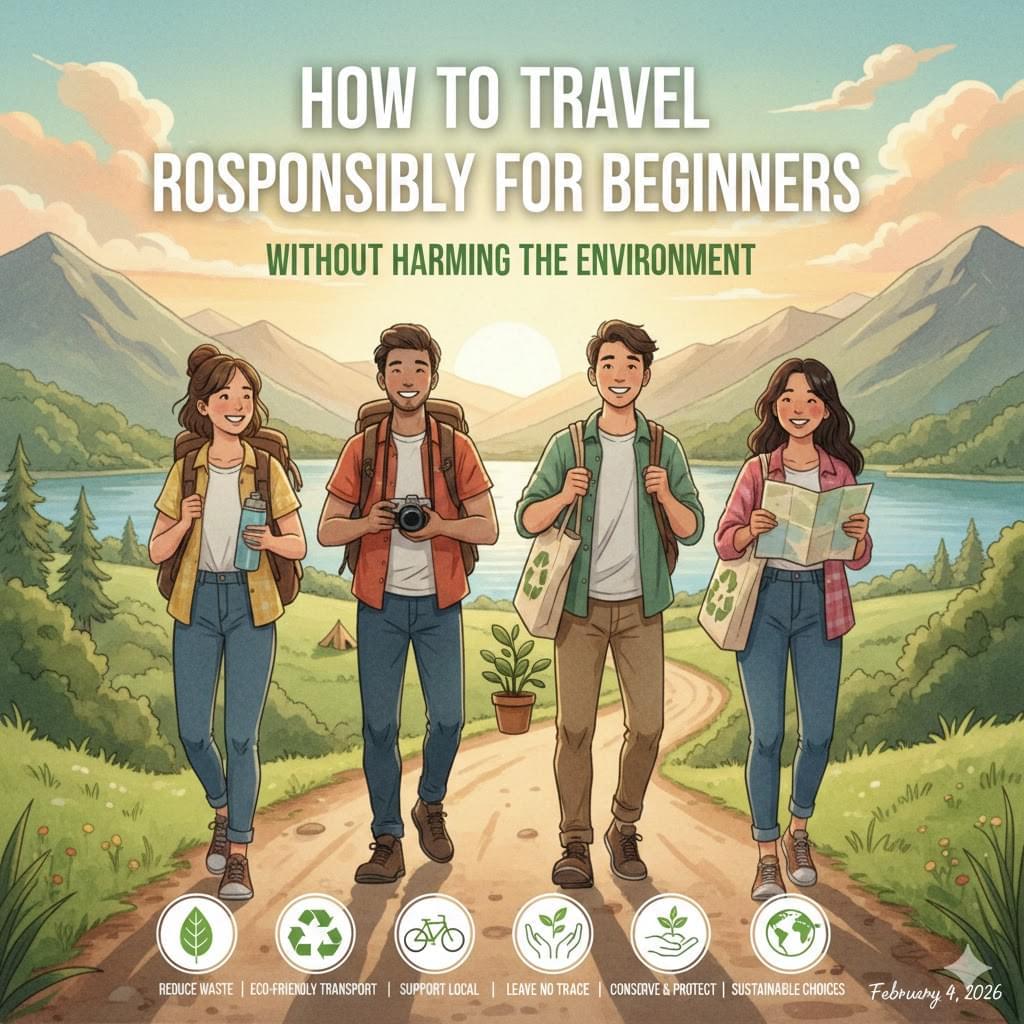
Travel is one of the most enriching experiences in life, but it also affects the environment, local communities, and natural resources in ways many people do not realize. Learning How to Travel Responsibly For Beginners using sustainable choices is about becoming aware of your impact and making thoughtful decisions that reduce harm while you explore. Sustainable travel does not mean sacrificing comfort or enjoyment. It simply means adopting habits that protect nature, respect cultures, and support local economies. This approach is at the heart of mindful journeys often shared through Mountain Girl Diary, where travel is seen as a way to connect with places without damaging them.
One of the first sustainable choices you can make while understanding How to Travel Responsibly For Beginners is reducing your use of plastic. Tourist destinations often struggle with waste management, and single-use plastics are a major problem. Carrying a reusable water bottle, cloth shopping bag, and reusable cutlery can significantly reduce the amount of waste you create. Refusing plastic straws, cups, and packaged items is a small step that creates a big difference over time.
Transportation is another major area where sustainable choices matter. Instead of choosing flights for short distances, opt for trains or buses whenever possible. Walking or cycling at your destination is even better. These options reduce carbon emissions and give you a closer connection to the place you are visiting. Choosing public transport instead of private taxis is a simple but effective way to practice How to Travel Responsibly For Beginners.
Packing smart is also part of sustainable travel. Overpacking increases luggage weight, which leads to higher fuel consumption during travel. Carry versatile clothing that you can mix and match. Use refillable toiletry containers instead of buying small single-use products. These mindful packing habits align perfectly with the idea of How to Travel Responsibly For Beginners.
Your choice of accommodation plays a significant role in sustainable travel. Staying in homestays, eco-lodges, or small local guesthouses helps support local families and reduces the environmental footprint compared to large hotels. Many sustainable accommodations follow practices such as rainwater harvesting, solar energy use, and waste segregation. Reusing towels, turning off lights, and taking shorter showers are additional ways to conserve resources.
Respect for nature is central to How to Travel Responsibly For Beginners. When visiting beaches, forests, mountains, or parks, avoid leaving any waste behind. Stick to marked paths during treks to protect vegetation and prevent soil erosion. Avoid touching or feeding wildlife, as it disrupts their natural behavior. Take photographs and memories instead of collecting natural items as souvenirs.
Supporting local communities is a key sustainable choice. Eating at local restaurants, buying handmade crafts from local artisans, and hiring local guides ensures that tourism benefits the people who live there. This not only helps the economy but also gives you a more authentic travel experience. These choices reflect the true spirit of How to Travel Responsibly For Beginners.
Water and energy conservation should be practiced wherever you stay. Many tourist areas face water shortages, especially during peak seasons. Taking short showers, turning off taps properly, and switching off electrical devices when not in use are small actions that make a big difference. These habits are simple yet powerful examples of How to Travel Responsibly For Beginners.
Cultural respect is equally important. Learn basic local customs, dress appropriately when visiting religious or traditional places, and ask permission before taking photographs of people. Being polite and respectful helps maintain harmony between tourists and locals.
Managing waste responsibly is another sustainable habit. If you cannot find a dustbin, carry your waste until you do. Keeping a small waste bag in your backpack can be very helpful. This shows real commitment to How to Travel Responsibly For Beginners.
Traveling during off-peak seasons is also a sustainable choice. It reduces pressure on resources and helps prevent overcrowding. Popular tourist spots often suffer from overtourism, and choosing less crowded times to visit can protect these places.
Educating yourself before you travel makes your journey more responsible. Research the destination’s environmental issues and cultural practices. Awareness helps you make better decisions and avoid actions that may harm the place.
Finally, inspire others by setting an example. When fellow travelers see your sustainable habits, they are more likely to follow them. Responsible travel spreads through observation and awareness.
Understanding How to Travel Responsibly For Beginners through sustainable choices is about simple daily actions that protect the environment and respect local life. From reducing plastic use and conserving resources to supporting local communities and respecting nature, each small decision contributes to preserving beautiful destinations. This mindful approach, often reflected in the travel philosophy of Mountain Girl Diary, ensures that travel remains meaningful not only for you but also for the places you visit and the people who call them home.